research reports, indices and scorecards
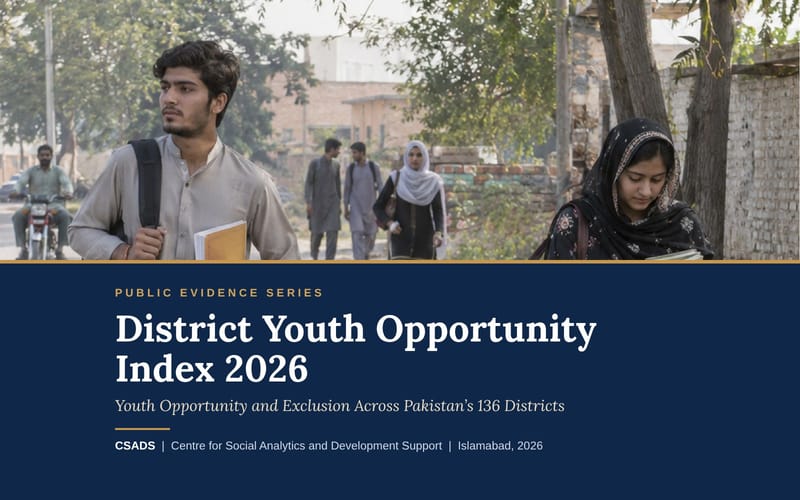
District Youth Opportunity Index 2026
A district by district index scoring all 136 districts of Pakistan on youth literacy, enrolment, work and inactivity, using Census 2023. It shows where disadvantage is deepest, where numbers are largest, and where young women are furthest behind.
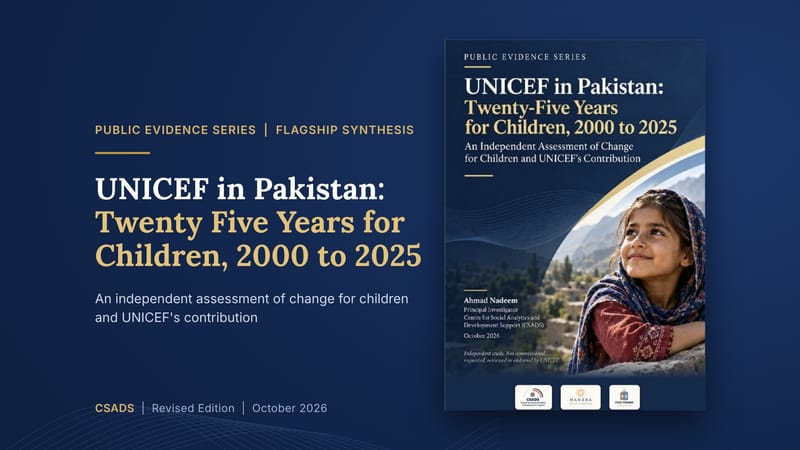
UNICEF in Pakistan: Twenty Five Years for Children, 2000 to 2025
An independent assessment of how life changed for Pakistan's children between 2000 and 2025 and where UNICEF's contribution can be credibly shown. The flagship synthesis grades the evidence across health, nutrition, WASH, education and protection, and sets priorities for 2026 to 2030.
UNICEF in Pakistan, Volume I: Survive and Thrive
Child survival, primary health care, immunization and nutrition in Pakistan from 2000 to 2025. The volume traces falling under five mortality, record immunization coverage and persistent stunting, and grades the evidence behind UNICEF's systems and humanitarian contributions.
UNICEF in Pakistan, Volume II: Safe and Resilient Environments
Water, sanitation, hygiene, climate resilience and humanitarian WASH in Pakistan from 2000 to 2025. The volume separates national WASH trends from UNICEF's role, assesses PATS and PATS Plus, institutional and humanitarian WASH, and sets priorities on service quality and public finance.
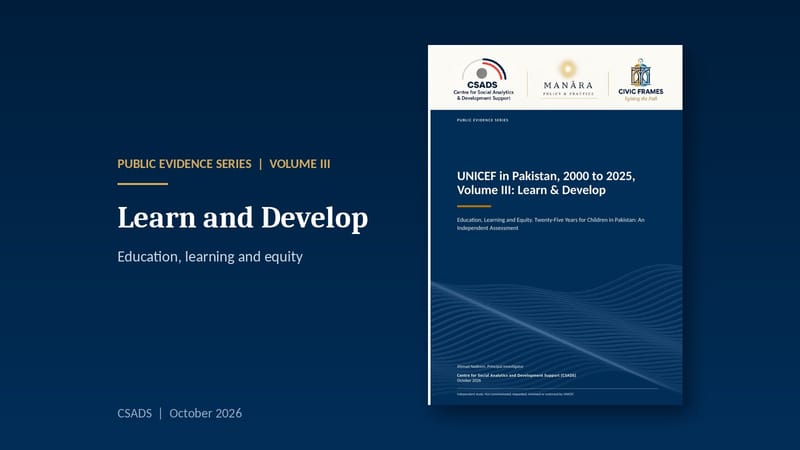
UNICEF in Pakistan, Volume III: Learn and Develop
Education, learning and equity in Pakistan from 2000 to 2025. The volume examines out of school children and learning poverty, identifies Alternative Learning Pathways as UNICEF's clearest catalytic contribution, and grades the weaker evidence on girls' education, early learning and data systems.
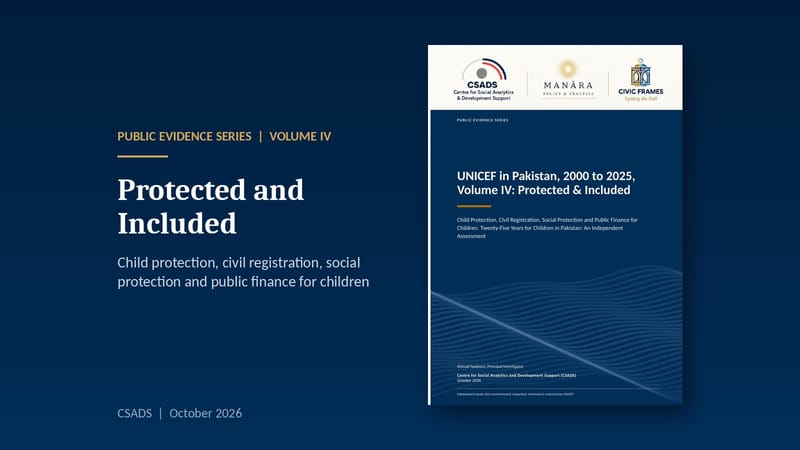
UNICEF in Pakistan, Volume IV: Protected and Included
Child protection, civil registration, social protection and public finance for children in Pakistan from 2000 to 2025. The volume finds Digital Birth Registration the best evidenced UNICEF contribution and sets priorities for legal identity and a financed protection workforce.
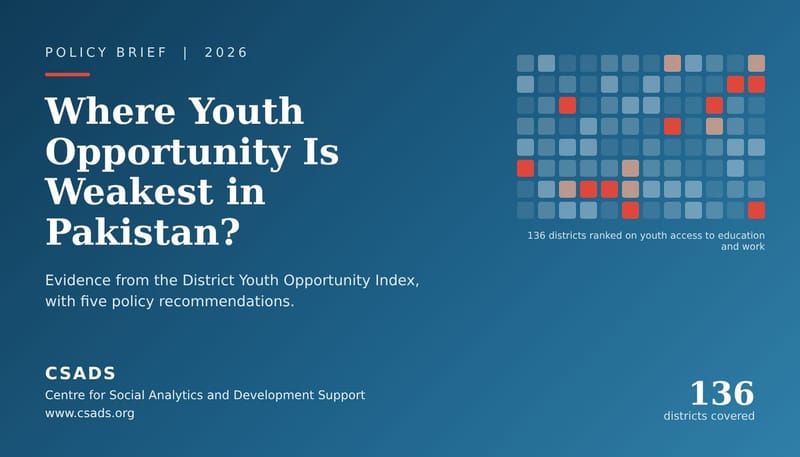
Where Youth Opportunity Is Weakest in Pakistan?
A four page policy brief showing where young Pakistanis have the least access to education and work, with five recommendations for government, training authorities and the Pakistan Bureau of Statistics.